Reading: November 28, 2025

Books Read:
What Monstrous Gods by Rosamund Hodge
Phantastes by George MacDonald
The Protoevangelium of James
Three shorts by Clifford D. Simak: “Installment Plan”, “I Had No Head and My Eyes Were Floating Way Up in the Air”, and “Small Deer”
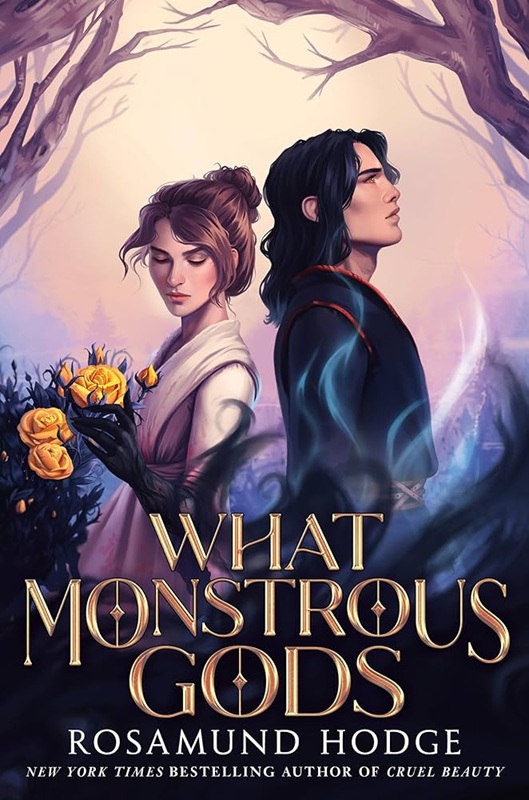
I was delighted with Rosamund Hodge’s What Monstrous Gods. Lia is a novice on the verge of taking her vows as a nun, dedicating her life to praising Nin‑Anna, one of the many gods in this world. She is the eighth girl chosen to attempt lifting the curse that has left the royal family asleep for five hundred years.

Among the things that will stay with me from this novel are the settings. Several god‑realms are visited; places vividly strange and darkly powerful. Each shrine that serves as a gateway feels fully realized, and the gods themselves are unforgettable. Take Nin‑Anna, Lady of Spring and Healing:

A gentle, dawn‑bright goddess. She has golden hands, and flowers spring from the earth where she walks. Springtime and healing and new life are her domain. Her saints have golden hands and die of a burning fever as they whisper of flowers.

Or Mor‑Iva, Knife of the Gods:

A dark, bloody goddess. Her chest is a bloody chasm, and she holds her heart in charred, clawed hands. She is the knife of the gods and slays those she deems unworthy. Her saints have clawed hands with skin charred black; they die when their hearts burst under her judgment.

The saints of these gods are another haunting element. Some saints are made against their will; others dream of sainthood. Either way, as those descriptions suggest, sainthood is no blessing.

There are heretics in this world too. These figures the reader recognizes as Christian, though that word is never spoken outright. Against this rich backdrop, Lia travels, navigates political realities, loves, and hates. Highly recommended!
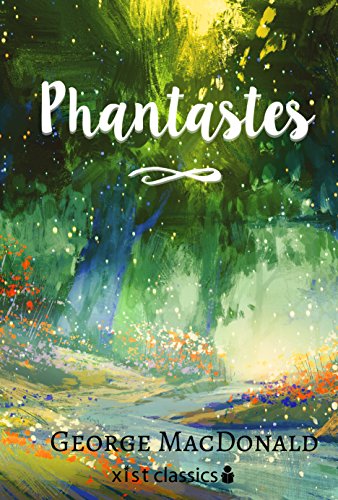
From there I went to another novel where the main character wanders into a strange realm. Phantastes is the second George MacDonald novel I’ve read, and one thing I know is that it that deserves a slower, more careful read than the read I gave it. It’s dreamlike and episodic… through those dreams, it took me a minute to realize that what was unfolding was an exploration of what it means to be a good man.

MacDonald wrote this early in his life, while Lilith – the other of his novels I’ve read – was the last thing he published. I don’t think I was thinking this hard about life in my twenties, certainly not like I am now. And I certainly am oblivious to much of the symbolism here. I’ve long thought that we, as a society, have lost the meaning of so many of the symbols that people in the past would have understood because we no longer share the same stories.

One I think I grasp: the marble woman seems to stand for “enlightenment”, something always pursued but never quite possessed. Near the end, the protagonist becomes a knight, assuming that was the pinnacle of masculinity, only to step down into the role of squire, choosing service over status, and realizing that true strength lies in humility.

At least, that’s what I’m taking from it. And I’m sticking to it.
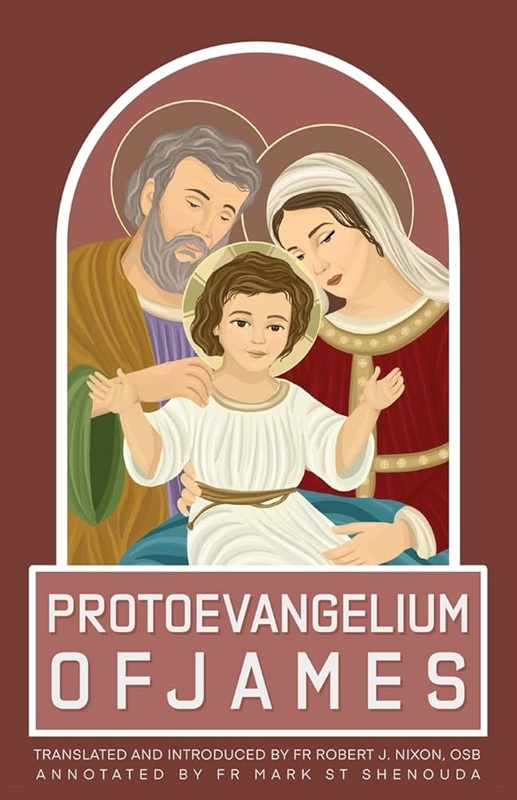
In a church discussion, I realized I had no idea where the names Joachim and Anna – Mary’s parents – came from. How do we know their names? They aren’t mentioned in the New Testament. A little digging led me to the Protoevangelium of James, a late second‑century text that was not considered scripture by the Magisterium. Intrigued, I tracked down a copy.

The book recounts the story of Joachim and Anna, whose experience mirrors that of Abraham and Sarah, as well as Zechariah and Elizabeth: childless until late in life, when God intervenes. It then turns to Mary’s youth in the temple, her betrothal to Joseph, and concludes with the birth of Jesus and a few of the events we are familiar with that follow in the Gospels.

Reading it inevitably raises questions about scripture itself: what was included, what was left out, and why. Of this book there shouldn’t be any question; it reads like religious fiction. At one point Joseph is accused of defiling the pregnant Mary, who is described as a temple virgin. Though they were betrothed, Joseph is portrayed less as a husband than as her guardian. To prove their innocence, a priest administers “the Lord’s water of testing”. Joseph and Mary drink, go out separately to the wilderness for a spell, then return unharmed, and thus vindicated.

To my knowledge, nothing like this appears in the New Testament. There is a parallel in the Old Testament: Numbers, Chapter 5. But even that differs in important ways. The whole episode feels more like a fanciful elaboration than a canonical account. Still, it was an intriguing read, and one that sheds light on how early Christians filled in the narrative gaps with imagination and legend.
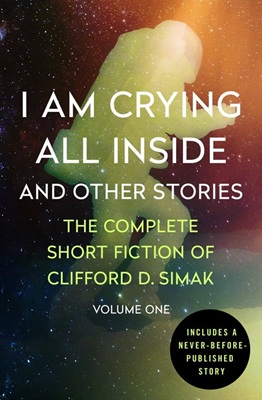
I’ll finish with three short stories from Clifford D. Simak. The deeper I go, the more I appreciate him, and I’ve set myself the goal of reading everything I can over the next couple of years. (Surely I’ll be more faithful to that goal than my gym membership. Which gym was that, again?) That includes the fourteen‑volume collection of his complete short fiction. The first volume, I Am Crying All Inside and Other Stories, has already hooked me. I’m three stories in, and liked them all.

“Installment Plan” brings humans and robots together on an alien planet, intent on trading with the natives: human goods of every kind in exchange for tubers that contain a perfect tranquilizer. Simak nails modern humanity in this single line: “To a race vitally concerned with an increasing array of disorders traceable to tension, such a drug was a boon, indeed.”

“I Had No Head and My Eyes Were Floating Way Up in the Air” was originally intended for the third volume of Dangerous Visions, though Harlan Ellison never published it.* It appears here for the first time. The story unfolds as a narrative told by a man whose body is altered by local aliens after an accident. Or was it an accident? Simak takes us through this person’s thoughts and considers what it means to be human – or, rather, what this guy thinks it means to be human – along the way.

“Small Deer” (1965) takes us back to the age of dinosaurs. Time‑travel stories to that era are hardly rare, but this is a good twist. It’s action‑packed and ominous.

Simak is optimistic overall, but pessimistic in the right places. His stories are a refreshing break from modern science fiction and fantasy.

* The Last Dangerous Visions was published after Harlan Ellison passed away, but did not include Simak’s story.
Posted in Posts | Tagged | Comments Off on Reading: November 28, 2025

Reading: November 11, 2025

Books Read:
Star Trek: Seasons of Light and Darkness by Michael A. Martin
Rose of Jericho by Alex Grecian
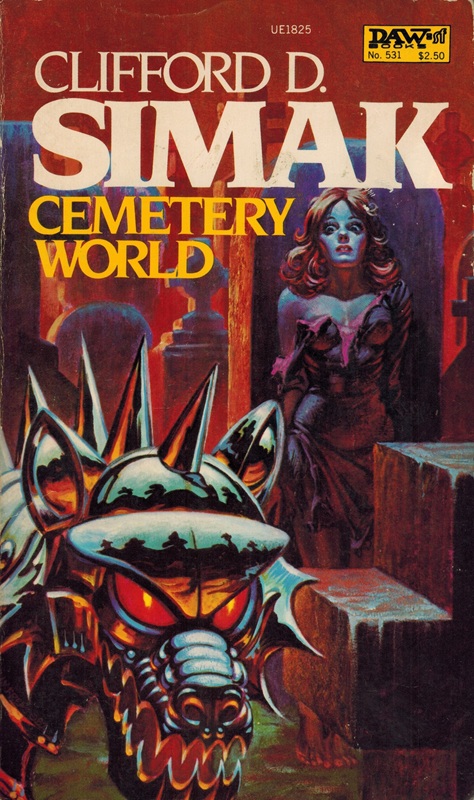
Cemetery World by Clifford D. Simak
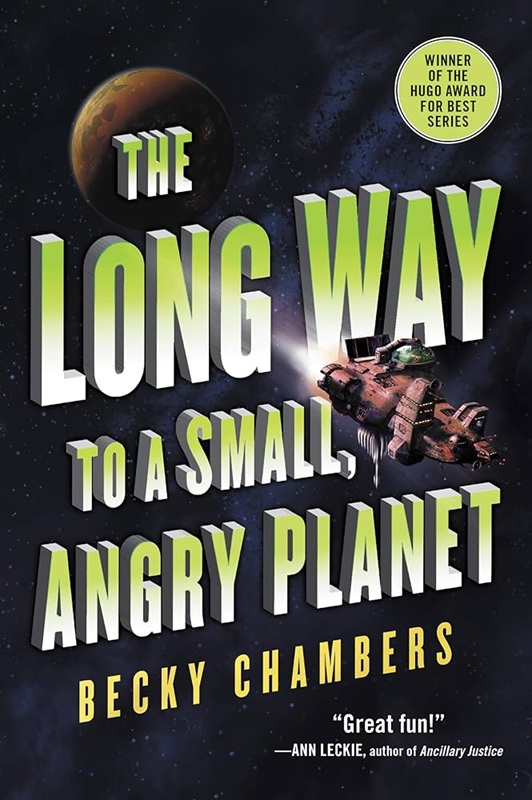
The Long Way to a Small Angry Planet by Becky Chambers

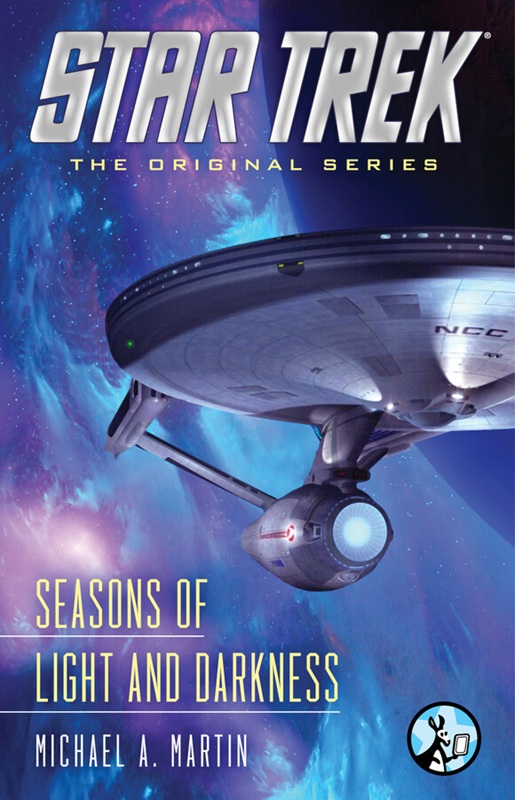
I picked up Star Trek: Seasons of Light and Darkness a while back because Steve Donoghue mentioned it in a BookTrek video. It’s hard to believe that video is a year old. Time is funny. As Steve has said more than once, one of the many appealing things about the original crew films is that the stories dealt with these beloved characters aging. Still heroic, but also mortal.

The novella starts with that familiar Star Trek II scene: McCoy at Kirk’s door with birthday gifts (Romulan ale and antique reading glasses), but Kirk is feeling down, feeling old, not liking the desk job he took. “Get your command back,” McCoy tells him, “before you really do grow old.” From that familiar scene, McCoy takes the Romulan ale to Spock’s place and the two have a conversation that only Spock and McCoy can have. During that conversation, McCoy tells a story from his early days as a Starfleet doctor.

I enjoyed this quite a bit. It hit some feelings I’m going through right now. Aging isn’t just decline; it’s also perspective. Wonderful stuff, that Romulan ale…

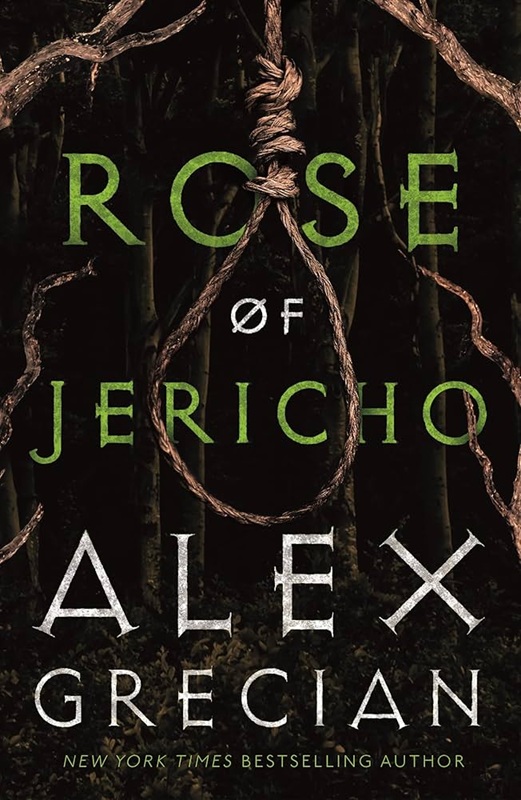
Rose of Jericho is the second book by Alex Grecian I’ve read, and I’ve enjoyed them both. This is a sequel to Red Rabbit, but the loose kind of sequel where some characters carry over without requiring you to read the first. Both books are horror westerns. Red Rabbit has a posse hunting a witch, while in Rose of Jericho a character kills Death which, as you can imagine, messes things up quite a bit.

Killing Death is one of those recurring ideas in fiction. The first time I remember encountering it was On a Pale Horse by Piers Anthony, which I remember liking in high school. These stories borrow from Greek myth where Sisyphus manages to to chain Thanatos, who is Death personified. While Death is bound, no mortal can die and go to the Underworld. Eventually Sisyphus annoys the gods enough that he ends up pushing that rock forever.

I do like Grecian’s blending of the mythic with the western setting. It’s dusty, violent, and supernatural all at once. And there are ghosts.

I got to visit Clifford D. Simak again, this time with Cemetery World. I keep returning to Simak because his books have a kind, thoughtful feel to them that I like very much. Here, Earth has become a cemetery planet; a place where humans return to be buried. A corporation runs the place, and our protagonist shows up to wander through it.

Aa always, I marvel at what Simak throws into his stories. There are ruins, ghosts, robot wolves, alien races. There’s also a surprising and prescient bit about AI working with humans to create art, which made me stop to consider how often Simak does that.
Simak writes science fiction, but he doesn’t leave mythic stuff behind when he does. That may be why I like him so much. Where else will I find genuine science fictional ideas rubbing elbows with ghosts and goblins? His books are contemplative and contain thoughts about the whole of humanity, not just humanity’s technology.

Last up this time is The Long Way to a Small Angry Planet by Becky Chambers. This book felt like hanging out with a spaceship crew. Not sure why I say “felt like”, because that’s exactly what this book is: a road trip with a crew that sets out to establish a wormhole at a new planet. The story is not so much about the wormholes as it is about the crew getting to know each other on the way to do the thing.

It’s warm, episodic, and full of found-family moments. In the end, though, there was so much sitting around and chatting that I wanted it to move quicker. Still, I mostly enjoyed the trip. I don’t plan to read any more of this series, but will keep my eye out for when Chambers moves on from this and her Monk and Robot stories. I do like her style, and I like her optimism like I like Simak’s.

Posted in Posts | Tagged | Comments Off on Reading: November 11, 2025

Reading: October 29, 2025

Books Read:
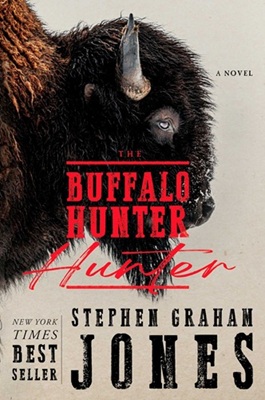
The Buffalo Hunter Hunter by Stephen Graham Jones
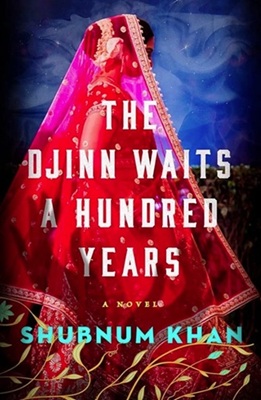
The Djinn Waits a Thousand Years by Shubnum Khan
A Tramp Abroad by Mark Twain

The last book I read by Stephen Graham Jones was Mongrels. I had mixed feelings about it, but like all of his work, it lingered. Still does. That one was about werewolves. In the The Buffalo Hunter Hunter, Jones brings us vampires.

The imagery is unforgettable. An Indian in dark glasses and a cassock walks into a frontier church in the 1800s. After the service, he remains seated while the nervous pastor hovers, unsure. Finally, the man speaks: he’s here to give his confession. And what a confession it is.

The Only Good Indians was my favorite Stephen Graham Jones novel until now. That book haunted me with its blend of horror, memory, and cultural reckoning. That book was strange and unique. The Buffalo Hunter Hunter is also unique. It’s more intimate. It owes much to Stoker’s classic vampires, but Jones makes his own rules.

The Djinn Waits a Hundred Years by Shubnum Khan echoes classic horror too, though I can’t call it a horror novel outright. It’s haunted, yes, but gently. The house at its center looms large, not just as a setting but as a character, it’s hallways and rooms layered with memory, grief, and secrets. The presence of ghosts and djinn gives it a spectral texture, but the tone is more melancholic than terrifying.

It reminded me of The Haunting of Hill House not only in its mood, but in the prominence of that house. Both novels portray a house can hold sorrow like a sponge, and that the past doesn’t stay buried just because the doors are locked.


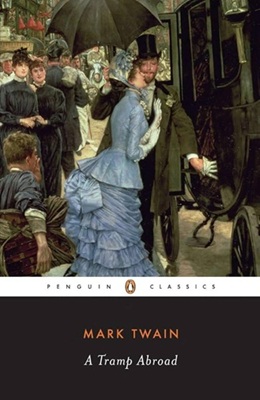
For something completely different: A Tramp Abroad by Mark Twain. It’s travel writing, the first travel writing of Twain’s I’ve read excepting an essay or two in high school. He describes his travels in Germany, Switzerland, and Italy in short laugh-out-loud funny pieces. Eventually, SFFaudio will post a podcast that I participated in but contributed little to as Jesse and Cora (who lives in Germany) had much to say. I learned a lot.

There’s something comforting about Twain’s voice. Grumpy, curious, and always a little bit delighted by the absurdity of the world. I could use some more of his attitude.

I enjoyed this a LOT, but my favorite piece of travel writing is still Blue Highways by William Least-Heat Moon.

Posted in Posts | Tagged | Comments Off on Reading: October 29, 2025

Time and Again by Clifford D. Simak

I’ve been working my way through the works of Clifford D. Simak with Shawn D. Standfast and other excellent folk.

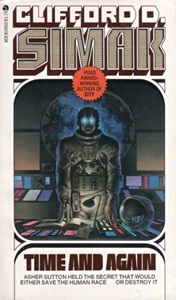
We have read several of his novels together, though not in a particular order. Our latest read was Time and Again, Simak’s second novel.

For a long time, I mistakenly believed that Simak was Catholic. It wasn’t anything specific in his writing, but a piece of misinformation that stuck. At some point, I read his name in a list of “Catholic authors”, and I carried that forward. But he is not Catholic, though his family does have Catholic history.

He refers to religion often in his work, and to knowledge, and to humanity’s purpose, which most commonly involves peace and harmony.

Since beginning this deep dive into his work, I’ve noticed that he critiques aspects of religion, especially Christianity. But I wouldn’t call him unfair. He probes, questions, and often turns religious ideas around in interesting ways. A good example comes from Time and Again, when the main character, Asher Sutton, asks if he must accept a challenge to a duel:

“You are under one hundred?” the robot asked.

“Yes.”

“You are sound of mind and body?”

“I think so.”

“You are or you aren’t. Make up your mind.”

“I am,” said Sutton.

“You do not belong to any bona fide religion that prohibits killing?”

“I presume I could classify myself as a Christian,” said Sutton. “I believe there is a Commandment about killing.”

The robot shook his head. “It doesn’t count.”

“It is clear and specific,” Sutton argued. “It says, ‘Thou shalt not kill.'”

“It is all of that,” the robot told him. “But it has been discredited. You humans discredited it yourselves. You never obeyed it. You either obey or you forfeit it. You can’t forget it with one breath and invoke it with the next.”

“I guess I’m sunk then,” said Sutton.

“According to the revision of the year 7990,” said the robot, “arrived at by convention, any male human under the age of one hundred, sound in mind and body, and unhampered by religious bonds or belief, which are subject to a court of inquiry, must fight a duel whenever challenged.”

Sutton can’t claim Christianity to avoid the duel, not because the commandment is unclear, but because human behavior has discredited its authority.

A sharp point — made by a robot.

Time and Again is quite good. I highly recommend it. Simak challenges the idea of human superiority. Like good science fiction does, these robots, aliens, and androids really point to something else: the danger of any ideology that promotes the superiority of one race or class of people over another. And in typical Simak fashion, there’s a lot more here, too.

Posted in Posts | Comments Off on Time and Again by Clifford D. Simak

Good Story 356: The Screwtape Letters

Julie and I talked about The Screwtape Letters by C. S. Lewis in the latest A Good Story is Hard to Find podcast.

This was a good discussion, as this book opens up a lot. A key quote for me was from the eighth letter:

He wants them to learn to walk and must therefore take away His hand; and if only the will to walk is really there He is pleased even with their stumbles.

And later:

Do not be deceived, Wormwood. Our cause is never more in danger than when a human, no longer desiring, but still intending, to do our Enemy’s will, looks round upon a universe from which every trace of Him seems to have vanished, and asks why he has been forsaken, and still obeys.

Posted in Posts | Comments Off on Good Story 356: The Screwtape Letters

Why Pope Leo XIV chose his name…

Pope Leo XIV speaks with the College of Cardinals in the New Synod Hall at the Vatican May 10, 2025, during his first formal address to the college since his election May 8. (CNS photo/Vatican Media)

From the Address of His Holiness Pope Leo XIV to the College of Cardinals, May 10, 2025:

Sensing myself called to continue in this same path, I chose to take the name Leo XIV. There are different reasons for this, but mainly because Pope Leo XIII in his historic Encyclical Rerum Novarum addressed the social question in the context of the first great industrial revolution. In our own day, the Church offers to everyone the treasury of her social teaching in response to another industrial revolution and to developments in the field of artificial intelligence that pose new challenges for the defence of human dignity, justice and labour.

I’m deeply interested in how the Church is responding to how AI is changing things for people. I’ll be reading Rerum Novarum soon so I have this context.

Posted in Posts | Tagged | Comments Off on Why Pope Leo XIV chose his name…

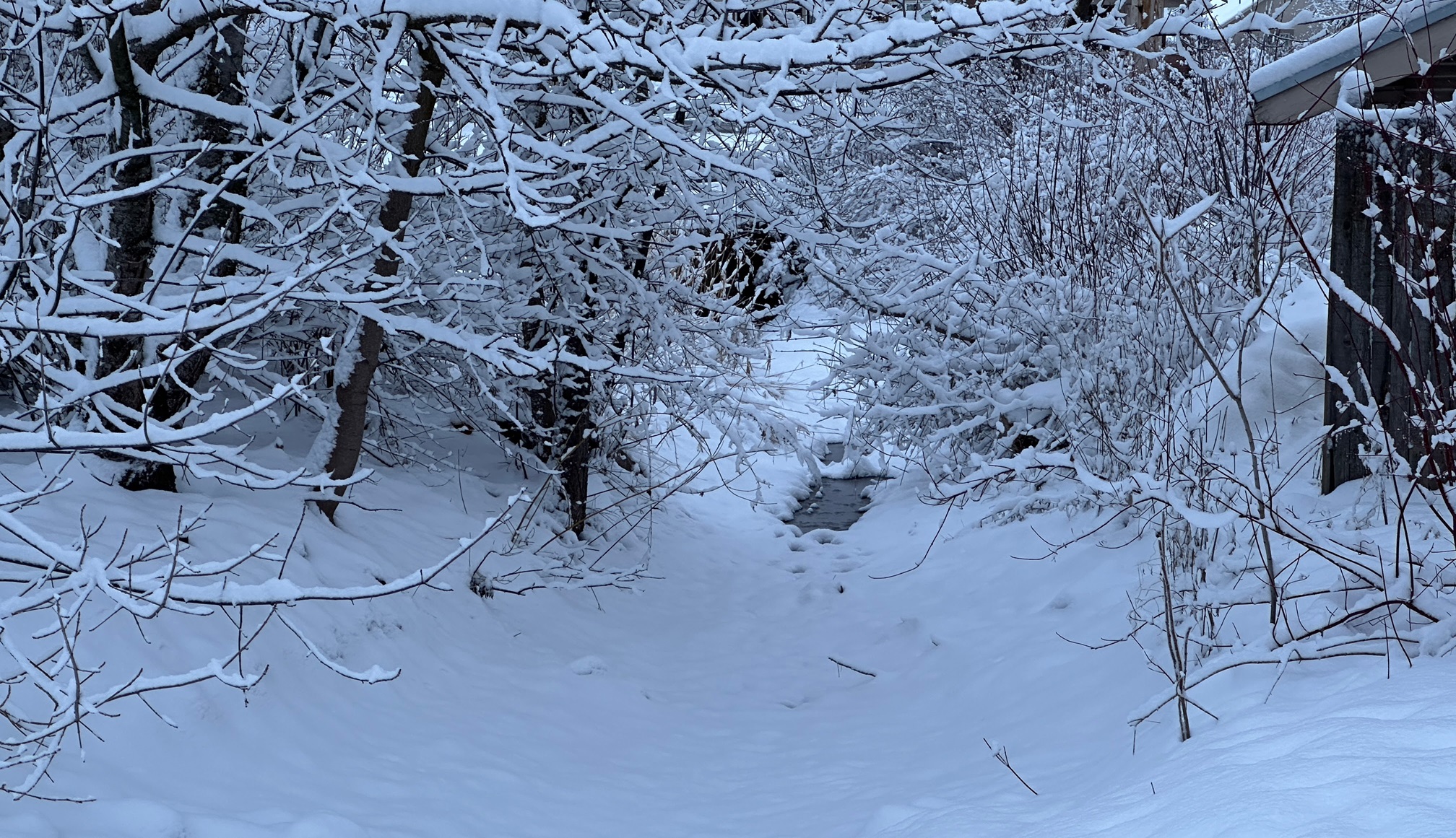
Snow earlier this week

Posted in Posts | Comments Off on Snow earlier this week

Pixar Remake

Posted in Posts | Tagged | Comments Off on Pixar Remake

Summer Storm


This storm cooled the place right off a week or so ago…

Posted in Posts | Tagged | Comments Off on Summer Storm

Monday Night Sunset

Posted in Posts | Tagged | Comments Off on Monday Night Sunset

A Few Pics

Taken last week in and around Logan, Utah:

Posted in Posts | Tagged | 2 Comments

Good Story 299: St. Thomas Aquinas by G. K. Chesterton

Just in time for his feast day, Julie and I read a book about St. Thomas Aquinas. St. Thomas Aquinas: The Dumb Ox by G. K. Chesterton. The book was mostly about philosophy, and what Aquinas brought back to the table. Thoughts like this:

Thus, even those who appreciate the metaphysical depth of Thomism in other matters have expressed surprise that he does not deal at all with what many now think the main metaphysical question; whether we can prove that the primary act of recognition of any reality is real. The answer is that St. Thomas recognised instantly, what so many modern sceptics have begun to suspect rather laboriously; that a man must either answer that question in the affirmative, or else never answer any question, never ask any question, never even exist intellectually, to answer or to ask.

You can listen on the Good Story website or subscribe at most of the places folks listen to podcasts; just search your favorite podcast app for A Good Story is Hard to Find.

Posted in Posts | Comments Off on Good Story 299: St. Thomas Aquinas by G. K. Chesterton